A pear gives you almost no warning. One morning it is hard as a stone under the thumb, and by the following weekend it has gone soft and mealy in the middle while the skin still looks immaculate. Pick it a week early and it never develops the perfume or the juice. Leave it a week late and it collapses in the fruit bowl before you get round to eating it.
The way out of that trap is to stop waiting for a pear to be ripe on the tree and start judging whether it is mature enough to finish ripening in your hands. That one distinction removes most of the guesswork. What follows is the routine used in orchards where pears are picked in passes rather than all at once: three tests you can do with your eyes, your fingers and your teeth, plus a few notes on how the rules shift from variety to variety.
Pears Ripen From the Inside Out
An apple softens fairly evenly, which is why a squeeze tells you so much. A pear softens from the core outward. By the time the flesh near the skin feels right under your thumb, the centre may already be grainy and collapsing. That is the mealy pear everyone complains about, and it was not caused by leaving the fruit too long on the tree. It was caused by picking it too late.
So the target is a fruit that is fully formed, heavy for its size, and still firm, with the sugars and aromas ready to develop off the tree. European pears — Williams, Conference, Comice, Bosc, Abate Fetel — all work this way. Asian pears are the exception: they ripen on the tree, are eaten crisp, and should be picked when they are genuinely ready, because they will not improve much in a bowl.
The Color Test: Read the Background, Not the Blush
Colour is the fastest test and the most often misread. Do not look at the red or bronze blush on the sunny cheek. Look at the background colour on the shaded side, or around the stem cavity, which is the last area to change.
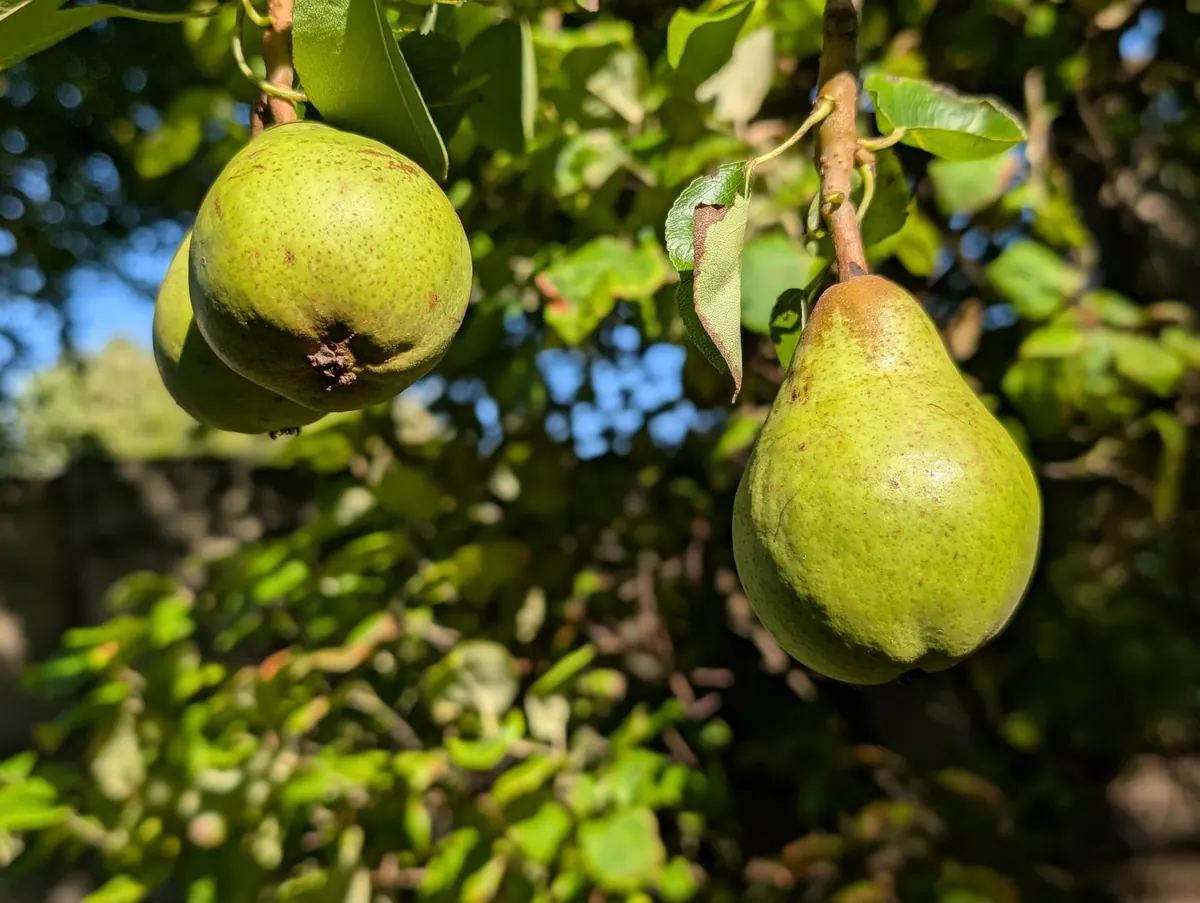
On green-skinned pears the background moves from a flat, dark, slightly dull green to a lighter, yellow-tinged green. On Williams it can shift quite quickly, sometimes within a few days. That first yellowing is your signal to start testing, not your signal to strip the tree.
Russeted pears such as Conference and Bosc will not give you this reading at all. Their skin is brown and rough from the start, so ignore colour completely and lean on the stem and firmness tests. On red-skinned varieties, watch the background colour beneath the blush, which turns from green to a creamy yellow as the fruit matures. Also keep an eye on the lenticels, the small dots across the skin: they become more prominent and slightly more widely spaced as the fruit fills out.
The Stem Test: Lift, Don't Pull
This is the most reliable single check in the orchard. Cup the fruit in your palm, lift it horizontally, and give it the gentlest quarter-turn.
- It releases cleanly with a soft snap and the stem stays attached to the fruit: ready to pick.
- It holds on and you feel resistance: too early. Let go and come back in two or three days.
- It drops at a touch, or falls when you brush past: you are late. Pick and use those fruits immediately.
Never pull downwards or tug hard. The stem sits on a short spur that also carries next year's bud, and tearing it off costs you fruit the following season.
The neck check
For a second opinion, press the flesh just below the stem with your thumb. On most European pears a slight give here means the picking window has opened. A rock-hard neck means wait; a neck that dents easily means pick now and eat soon.
The Taste Test: Eat One Pear to Save the Rest
No amount of squeezing replaces eating a sample. Take one fruit from the tree — ideally from the sunniest, most forward part of the canopy — and cut a thin slice from the cheek.
If the flesh tastes watery, astringent and faintly of nothing, the fruit is immature and will never develop properly. If it is sweet, juicy and aromatic, you have found your harvest date. Check the seeds as a secondary clue: pale seeds mean immature, dark brown seeds mean mature. Just remember that seeds darken before the flesh softens, so a brown seed is permission to start testing, not proof the whole tree is ready.
One pear sacrificed to the knife is cheap insurance against a crate of gritty fruit.
How the Tests Shift by Variety
Pears are not interchangeable, and the window can be surprisingly narrow.
- Williams (Bartlett): the colour change is obvious, and the fruit can move from underripe to overripe in under a week. Check daily once the first yellow appears.
- Conference: ignore colour, trust the lift test, and expect a longer, more forgiving window. It hangs well and stores well.
- Comice: the shortest window of the lot, with subtle colour cues. Lean heavily on the stem test and pick in several passes.
- Bosc: wait until the russet is fully formed and the neck gives slightly. It holds on the tree better than most.
- Abate Fetel: the long neck is the tell — watch for the first give just below the stem.
- Asian pears: pick when skin colour turns from green to yellow-green or gold and the fruit is sweet and crisp. They bruise easily and will not ripen further off the tree.
Weather compresses and stretches all of this. A hot, dry August pushes maturity forward by days; a cool, grey late summer holds it back. Heavy rain after a dry spell can swell the fruit and split the skin, so if a downpour is forecast and your pears are close, pick the ripest ones first.
Picking, Handling, and the First Two Days
Pick in the cool of the morning, when the fruit is dry and firm. Cradle each pear in your palm and place it into a padded basket rather than dropping it. Keep stems on, and do not stack more than two layers deep in a bucket, because a single bruised pear will flavour the whole batch with that flat, fermented note.
European pears usually need a spell of cold before they ripen evenly. A week or two in the fridge, then two to four days at room temperature, brings most varieties to their best. Ripen in small batches so you are not facing four kilos of soft fruit on the same afternoon, and check the bowl daily. Fruit from the top and outside of the canopy ripens first; shaded fruit lower down can lag by a week or more, which is exactly why picking in passes beats picking in one long session.
A Simple Field Routine for Harvest Week
Walk the trees once a day while the crop is close. Eat one sacrificial pear. Do the lift test on three or four fruits in different parts of the canopy. Pick only what releases cleanly, leave the rest, and write the date in a notebook along with a line about the weather. After two or three seasons that notebook becomes the most accurate harvest guide you own, because it is calibrated to your soil, your varieties and your microclimate rather than to a generic chart.
Pears reward patience more than most fruit, but only for a week or so. Learn to read the background colour, trust the soft snap of a stem letting go, and taste before you commit the whole tree to the crate.
Photo: Sam L. Yip / Pexels