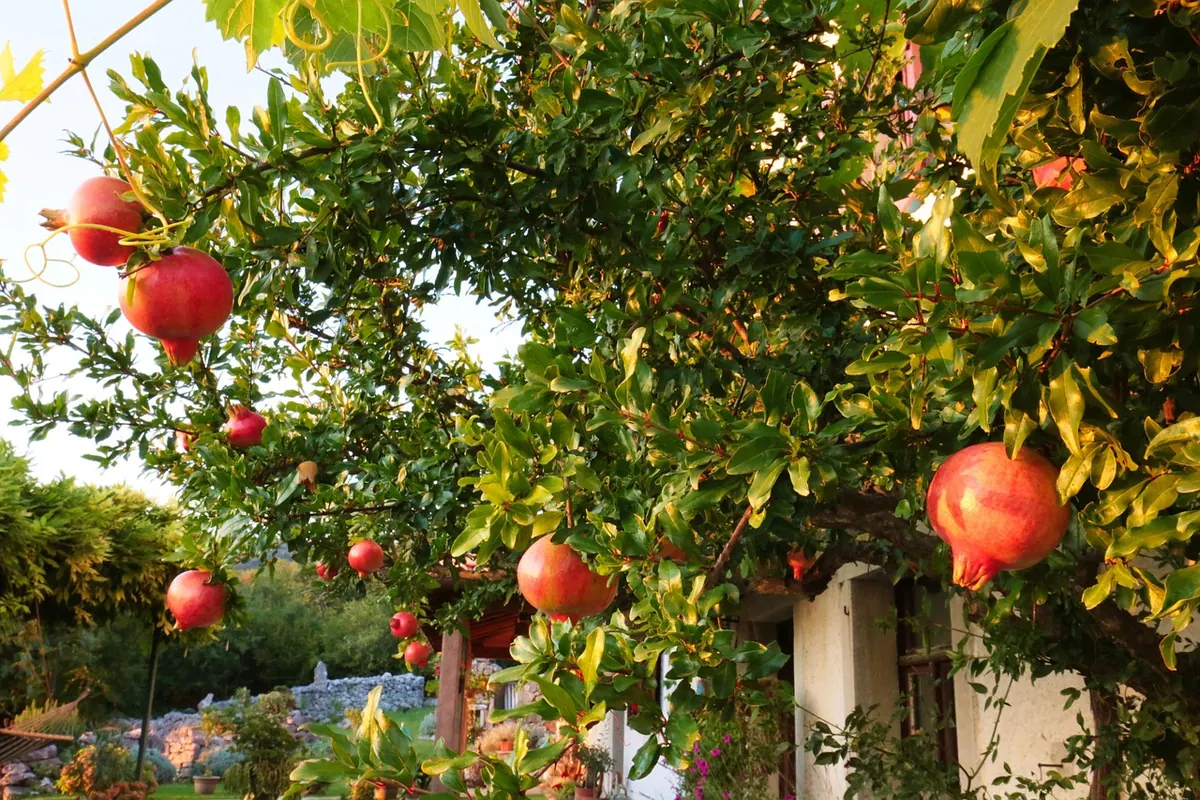
A backyard the size of a parking space can still hold a productive fruit tree, provided it is the right one. Most disappointing small orchards fail for ordinary reasons: the tree was far too vigorous for the spot, it flowered every spring but never set fruit because it had no pollination partner, or it went in where a new shed now blocks the afternoon sun. All three are avoidable with an hour of measuring and thinking before you order anything.
What follows is the order in which those decisions make sense, from the ground up.
Start With the Site, Not the Fruit
Fruit trees are long-lived, so the place matters at least as much as the variety. Spend a weekend afternoon watching your yard before you fall in love with a catalogue photograph. Most fruiting trees want six hours or more of direct sun to ripen fruit well and to dry their leaves quickly after rain. Apples and pears will manage with slightly less; peaches, apricots, cherries and figs want the warmest, brightest corner you have.
Then check the dull practicalities. How far away is the fence, the shed, the drain, the boundary path? A tree that leans over a neighbour's gate becomes a problem you cannot easily undo. Note where water stands after heavy rain, because soggy winter soil kills more young trees than frost does. And measure the canopy space you can honestly give away, not just the room for a trunk. Sketch the yard, mark north, and shade in what is in sun at ten in the morning, at one, and at four.
Let the Rootstock Set the Size
Beginners shop by variety and overlook the line on the label that matters most. A fruit tree is two plants joined: the scion, which is the variety fruiting on top, and the rootstock, the root system that largely controls how big the tree becomes. The same apple can grow into a two-metre patio tree or a five-metre shade tree depending entirely on what it is grafted onto.
Rootstocks you will see on nursery labels
- Apples: M27 and M9 are strongly dwarfing, M26 sits in the middle, and MM106 is more vigorous and better suited to a larger garden.
- Pears: Quince C for tight spaces, Quince A for a little more tree; pears on pear seedling rootstock become large in time.
- Sweet cherries: Gisela 5 keeps them manageable, while Colt is far more vigorous.
- Plums: Pixy is dwarfing, St Julien A is the common middle ground.
- Peaches and apricots: usually on St Julien A or seedling roots, and naturally smaller; they suit a warm wall.
Treat those labels as a starting point rather than a promise. Soil depth, rainfall, wind and pruning all shift the final size, and nurseries vary in how they describe the same rootstock. What is consistent is the trade-off: small rootstocks ask more of you. Stake the tree for its first years, water it in dry spells, and keep grass and weeds well clear of the trunk. A dwarf tree on thin, dry soil with a lawn competing at its feet will sulk for a decade.
Choose Fruit That Suits Your Climate and Your Patience
Apples, pears, plums and sour cherries are the most forgiving choices across temperate climates. Sweet cherries are fussier: they split in wet weather near harvest, and the birds usually arrive before you do. Peaches and apricots flower early, so a late frost can remove the entire crop in an afternoon, which is why a sheltered wall helps so much. Figs are among the best small-garden fruits in mild areas, and in cooler regions they grow well in a pot that is moved under cover for winter.
Disease pressure matters as much as hardiness. Ask a local nursery which apple varieties cope with scab where you garden instead of ordering whatever looks handsome in a catalogue from another country. Resistant varieties cut the spraying to almost nothing, which is what most beginners actually want.
Be honest about quantity, too. A mature plum can bury a family in fruit for three weeks and then produce nothing for eleven months. Two smaller trees of different varieties, ripening a few weeks apart, usually serve a household better than one giant tree and a freezer full of regrets.
Pollination: The Detail Beginners Miss
Plenty of fruit trees cannot set a worthwhile crop with their own pollen. Apples and pears are the classic case: you generally need two different varieties that flower at the same time. Nurseries group varieties by flowering period, numbered roughly one to six, and the two you pick should be in the same group or one group apart. A crabapple in the corner will pollinate apples as well, and it takes up very little room. Note that a few triploid apples, Bramley's Seedling among them, produce poor pollen and cannot serve as the pollinator themselves.
Self-fertile types make life easier in a tiny garden: most apricots, peaches and nectarines, sour cherries, quinces, and some plums including Victoria. Most figs sold for gardens set fruit without a partner. Sweet cherries, by contrast, nearly always need a compatible companion.
Do not rely on a neighbour's tree unless you know what it is and when it flowers. And remember that pollination is a job for insects, so a tree that happens to bloom during a cold, wet, windy week may set very little fruit no matter how carefully you planned.
Small-Space Options That Work
Containers. A tree on a very dwarfing rootstock can live for years in a pot 45 to 60 cm across. Use a soil-based compost mixed with grit for drainage, raise the pot on feet, water far more often than you would a tree in the ground, and repot or root-prune every few years before the roots circle the pot.
Walls and fences. Fan-trained cherries and plums, espalier apples and pears, and single-stem cordons along a path all use vertical space that a lawn never will. They need tying in and summer pruning, but the work is predictable and takes minutes rather than afternoons.
Family trees. Two or three varieties grafted onto one trunk save space, though growth can become uneven if one variety is much stronger. Ask which varieties are on the tree and whether they flower together.
Stepovers. An apple trained to one low horizontal arm about knee height makes an edible boundary along a path or vegetable bed.
Before You Order: A Nursery Checklist
- Confirm the rootstock and the realistic mature height, not just the variety name.
- Ask directly whether the tree is self-fertile or needs a partner.
- Check that your chosen pair flowers in the same period.
- Look at the graft union and roots; reject anything with damage or circling roots in a pot.
- Buy bare-root in the dormant season where you can, as it establishes well and is cheaper.
- Ask one local grower whether the variety ripens reliably in your area.
Plant It Right, Then Give It Time
Plant in the dormant season into a hole wide enough for the roots to spread without cramping, at the same depth the tree grew in the nursery. Stake it, water it thoroughly, and mulch around the trunk without piling mulch against the bark. Skip the fertiliser for the first year, prune only to remove broken or crossing branches, and keep the ground around the trunk clear of grass.
Then expect patience to be part of the process. Most fruit trees take three to five years before they crop properly, and a dwarf tree in a pot may take a little longer. Choose well now and the waiting is the hardest part of the whole job.
Photo: yul38885 / Pixabay